
Why Dogs Wag Their Tails: Decode Their Emotions and Signals

I’ve always been fascinated by how dogs communicate—watching their body language is like unraveling a secret code. My neighbor’s dog, Baxter, for instance, has this wild tail wag that you can almost hear swishing through the air when he sees me.
But then there’s Daisy, the shy little terrier down the street, whose tail barely wags at all, even when she seems happy. It got me thinking: what’s really going on when dogs wag their tails?
It turns out, there’s a whole lot more to this than the casual “happy dog” stereotype. Dogs use their tails as a kind of emotional and social antenna. The speed, height, and even direction of a wag can signal different emotions—excitement, anxiety, even caution. And the more you watch (and really pay attention), the clearer this picture becomes. (1)
Key Takeaway
- Dogs wag their tails for communication—emotions, social signals, and even instinctual behaviors.
- Tail wag speed, height, and direction reveal specific feelings.
- Full-body cues are crucial to accurately interpreting a dog’s tail wag.
1. Tail Wagging as Emotional Expression
Credits: SciShow
When we see a wagging tail, it’s tempting to think, “Oh, they’re happy!” But that’s just scratching the surface. Tail wagging is emotional shorthand for dogs.
- Height and Emotion:
- A high, upright tail that wags quickly usually means excitement or confidence. Picture Baxter, bounding up to say hello, his tail practically vertical.
- On the other hand, a low tail (or one tucked between the legs) speaks of fear, submission, or insecurity. Daisy’s soft, hesitant wag? That’s her cautious way of saying, “I’m okay, but don’t push me.”
- Speed and Intensity:
- Rapid wags—big, broad arcs—often mean sheer joy or enthusiasm.
- Slower, measured wags might suggest uncertainty. Think of a dog sniffing a new person or situation, tail moving carefully as if weighing options.
- Right vs. Left Wags:
- Research has found that dogs wag more to the right when they’re feeling positive emotions and to the left when uncertain or wary.
2. Tail Wagging in Social Communication
Dogs are social creatures, and their tails play a starring role in their interactions with other dogs and humans.
- Greeting Signals:
- A wagging tail is like a handshake or a wave, a non-verbal “Hi!” Dogs meeting for the first time will often wag tentatively at first, testing the waters.
- Around humans, tail wags can take on exaggerated movements (more sweeping, higher) because dogs learn that people respond positively to these signals.
- Dominance and Submission:
- A tail held high, wagging stiffly, can mean dominance or assertiveness. It’s a kind of “I’m in charge here” vibe.
- Submissive dogs wag low, keeping their tails almost hidden, signaling they’re no threat.
3. The Science of Wagging
This isn’t just cute behavior; there’s actual biology behind it. Dogs’ tails are an extension of their spine, and the muscles around the tail are linked to their nervous system.
- Neurochemical Connection:
- Tail wagging is tied to emotional arousal, governed by dopamine and other neurotransmitters. High dopamine levels can trigger those joyous, fast wags.
- Energy Expenditure:
- Wagging takes effort, especially the big, full-bodied sweeps. This is why tired or older dogs might wag less—even if they’re just as happy.
4. Variations in Tail Wagging: A Closer Look
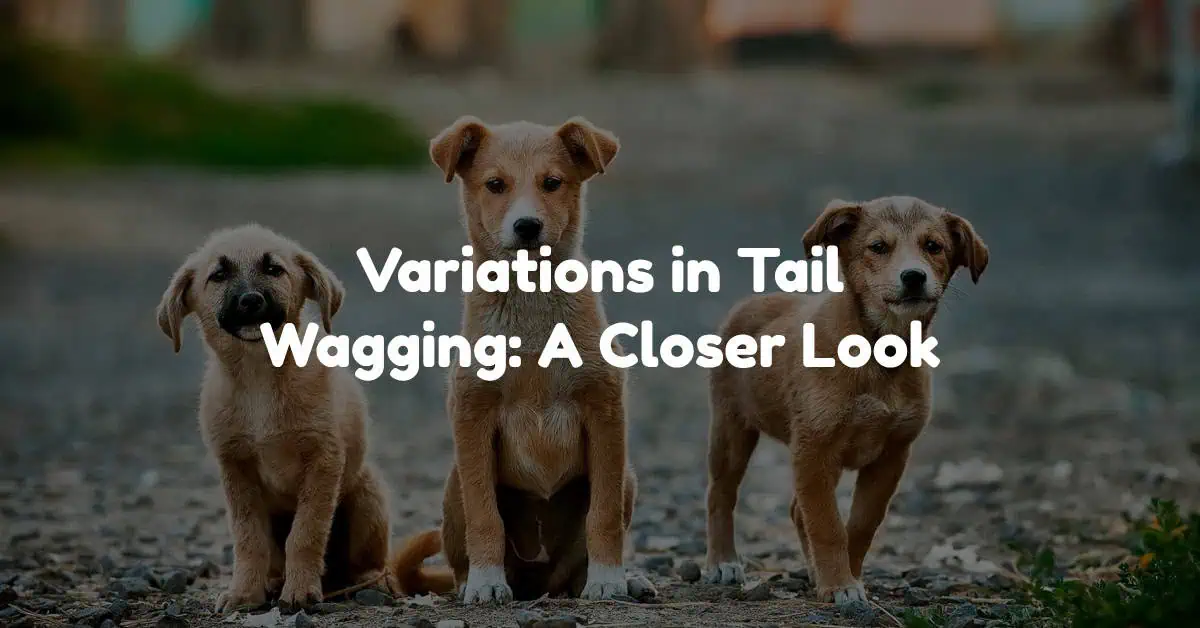
Not all tail wags are created equal, and breed plays a major role in how dogs express themselves. Take Labrador Retrievers, for example—they’re famous for their enthusiastic, whole-body wags that seem to scream joy. Contrast that with a Shiba Inu, whose curled tail limits their wagging range. Understanding these differences helps avoid misinterpreting a dog’s mood or intentions.
- Tail Shape Matters: Dogs with docked tails (like Dobermans) or naturally short tails (like French Bulldogs) may have more subtle wags. You’ll need to rely on other cues, like their posture or ear position, to gauge their mood.
- Breed-Specific Behaviors: Some breeds wag more conservatively, while others seem to live for tail action. Herding breeds often use their tails as balance tools, so their wagging tends to be more functional than emotional.
Knowing your dog’s breed quirks can make their “tail talk” easier to interpret. (2)
5. Context Is Everything: Understanding the Bigger Picture
A wagging tail doesn’t exist in a vacuum—it’s part of a larger symphony of canine body language. Misreading a wag can lead to misunderstanding your dog’s emotions. For example, a wagging tail paired with stiff legs and bared teeth isn’t a happy sign; it’s a warning.
- Body Position and Posture: If the tail is wagging, but the body seems tense or rigid, the dog may feel uncomfortable. Loose, flowing movements usually mean the dog is at ease.
- Eyes and Ears: Pay attention to where your dog is looking and how their ears are positioned. Soft eyes and relaxed ears complement a happy wag, while sharp, focused eyes and perked ears could indicate alertness or concern.
- Environmental Triggers: Context matters—a wag near a familiar person versus a stranger can mean very different things.
By observing the whole picture, you’ll understand your dog’s emotions with greater accuracy.
6. Myths and Misconceptions About Wagging Tails
One of the biggest myths about dogs is that a wagging tail always means they’re happy. While this belief is widespread, it’s far from accurate.
- Wagging and Aggression: Dogs sometimes wag their tails during confrontations. This is often a sign of heightened emotions, not friendliness. A fast, stiff wag coupled with a low growl can be a precursor to aggression.
- Insecurity Wags: Slow, uncertain tail wags are another common point of confusion. These don’t necessarily mean the dog is relaxed; instead, they may indicate hesitation or insecurity.
- “One-Size-Fits-All” Misunderstanding: Assuming every wag means the same thing can lead to missed cues. For instance, a dog wagging its tail low to the ground might be feeling nervous rather than friendly.
By debunking these myths, owners can better understand the nuances of their dog’s communication style.
7. The Role of Instincts in Tail Wagging
Tail wagging isn’t just an emotional or social behavior—it’s rooted in instinct. Dogs inherited this trait from their wild ancestors, where tail movement served practical purposes within packs.
- Instinctual Signals: In the wild, wolves use their tails to communicate dominance, submission, and intentions within the pack. Domesticated dogs have carried over these instinctual behaviors, adapting them to human interaction.
- Enhancing Survival: Tail wagging can signal a dog’s mood to avoid unnecessary conflict. For example, a low, slow wag tells more dominant pack members, “I’m no threat,” reducing the chance of aggression.
- Domestication Effects: Over generations, dogs’ wags have become more pronounced and varied as they learned to “speak” to humans. A wag that might have once been subtle is now often amplified to grab attention.
Understanding the instinctual roots of tail wagging adds another layer of appreciation for this complex behavior.
8. Practical Tips for Understanding Your Dog’s Tail Wags
Knowing what your dog’s tail is saying can improve your relationship and make daily interactions smoother. Here’s how to decode their signals like a pro:
- Observe Patterns: Pay attention to how your dog wags their tail in different situations. For example, how do they wag when they’re greeting you versus meeting a stranger?
- Combine Clues: Don’t rely on the tail alone. Pair it with body posture, ear position, and facial expressions to get the full picture.
- Respect Their Signals: If a wag feels “off” (like stiff or overly slow), give your dog space to assess their comfort level.
These small adjustments in how you observe your dog can make a big difference in how well you understand each other.
9. Strengthening the Bond Through Better Communication
When you truly “listen” to your dog’s tail language, you’re not just decoding their emotions—you’re building trust. Dogs thrive on connection, and when you respond to their cues, they feel seen and understood.
- Be Present: Spend more time watching your dog’s natural behaviors. This helps you recognize when something feels unusual.
- Respond Appropriately: Wagging tails aren’t always an invitation for cuddles. Sometimes, giving your dog space or offering reassurance is the best response.
- Celebrate the Small Wins: When your dog’s wagging tail signals joy or comfort, acknowledge it. Positive reinforcement strengthens the bond further.
By paying closer attention to the language of tail wags, you’ll create a relationship rooted in mutual understanding—a bond that’s as unshakable as a dog’s loyalty.
Conclusion
Dogs wag their tails for reasons far deeper than most of us realize. From emotions like joy and fear to instinctual signals passed down from their ancestors, tail wagging is a fascinating blend of biology, behavior, and communication. Every wag tells a story, whether it’s a jubilant greeting or a cautious exploration of something unfamiliar.
By paying attention to the nuances—the height, speed, direction, and the context around the wag—you can decode your dog’s emotions more accurately. Combine that with cues from their overall body language, and you’ll start to see your dog in an entirely new light.
Building this understanding doesn’t just make you a better pet parent; it strengthens your bond. Your dog trusts you to read their signals, and when you do, you’re creating a connection rooted in trust, respect, and love. So the next time that tail starts wagging, take a moment to listen to what they’re saying—it’s worth it.
FAQ
How does a dog wag its tail relate to its body posture and emotional state?
When a dog wags its tail, its body posture can reveal its emotional state. For example, a tail held high might mean confidence, while a natural position shows calmness. A dog wagging their tails quickly with relaxed posture often signals positive emotions like happiness. But don’t forget, tail movements can also communicate stress or fear.
Does a dog tail wagging to the left side reveal what the dog is feeling?
Yes, studies suggest that tail movements to the left side of the body can reveal a dog is feeling uncertain or cautious, while wagging to the right often reflects positive emotions. This connection to the side of the brain controlling movement helps decode dogs wagging their tails and what they’re expressing.
Can tail positions and ear position help understand a dog’s behavior?
Absolutely! A dog’s tail position works with other cues like ear position and facial expressions to give clues about its behavior. For example, a tail held low with pinned-back ears might indicate fear, while both in a natural position may show the dog is happy and relaxed.
What does science news say about why dogs wag their tail?
Current biology studies show that dogs wag their tails as part of their communication methods. It’s not just about happiness – wagging behaviour results from responding to rhythmic stimuli, signaling emotional states and intentions to others. Tails communicate in ways we’re still learning about through research.
How does tail docking affect a dog’s communication methods?
Tail docking can limit a dog’s ability to express emotions and intentions through tail movements. Tails communicate much more than we realize—without full wagging their tails, dogs lose key tools for showing positive emotions, fear, or even their natural position of calmness, which may confuse other dogs.
Do dogs wag their tail when responding to rhythmic stimuli?
Yes, rhythmic stimuli, such as music or repetitive sounds, can influence wagging behaviour. Tail movements initiated in these contexts may not communicate specific emotions but highlight how external factors impact dogs wagging their tails, demonstrating the complex ways they react to their environment.
How do tail positions connect with a dog’s psychology today?
From a body posture perspective, psychology today explains that tail positions often align with mood. For instance, a long wagging tail rhythmically in a natural position signals the dog is happy, while a stiff tail may suggest stress or alertness. Tail positions help decode this canine language.
Can a dog tail wagging patterns show communication on the side of the brain?
Yes, research shows dogs wag their tail differently depending on the side of the brain processing information. Wagging to the right correlates with positive emotions, while wagging to the left side may show caution. This fascinating link explains why wagging their tails is so complex.
How do wagging tails interact with veterinary medicine in understanding dog behavior?
Veterinary medicine often examines how tails communicate a dog’s emotional state. For example, long wagging tails during playful moments or stiff ones during fear help vets assess both health and mental well-being. Tail movements hold critical clues for medical and behavioral evaluation.
References
- https://www.scientificamerican.com/article/why-do-dogs-wag-their-tail/
- https://www.the-scientist.com/why-do-dogs-wag-their-tails-72220
